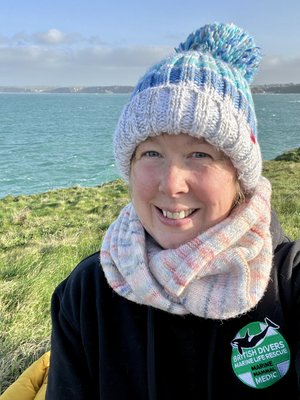
Reflections on a deeply nature-connected way of being
The warmer months have a way of inviting us outside.
Days stretch out a little longer. The sea beckons. Coastal paths become busier. We walk more, swim in the ocean, paddle up rivers, catch a wave, watch the sun go down, pack a picnic, or simply sit in the garden with a cup of tea. Time in nature becomes part of the rhythm of this season almost … well, naturally!

We know from a growing body of research that spending time in natural environments can support mental wellbeing, including reductions in perceived stress and improvements in mood. The evidence is encouraging, although researchers are still exploring exactly what makes some experiences more restorative than others.
And for those of us who spend much of our time caring for, supporting and being there for others, perhaps there is something particularly precious about finding a little space simply to be.
But I wonder if there is another invitation waiting for us? Not simply to spend more time in nature, but to allow nature to spend time with us. To dwell in and with nature, attentively.
And there is the difference.
It is the difference between walking a familiar coastal path whilst mentally rehearsing tomorrow's to-do list, and pausing long enough to notice the colour of the sea changing beneath the clouds.
It is the difference between counting steps and becoming curious. Between looking and truly seeing. Between looking on and being immersed and deeply connected.
Perhaps, too, it is the difference between using our time outside to escape from ourselves, and allowing it to become a place where we can hear ourselves a little more clearly.
An invitation to embrace blue space
100 Days of Blue has been an invitation to all of us to spend more time near, on, in or under water and, also importantly, to notice what happens when we do. It hasn't been about swimming every day, finding a spectacular coastline or adding another item to an already busy life.

‘For a while, we can let the rhythm of the water hold us, giving us space to breathe, notice and simply be’
It has simply been an invitation to pay exquisite attention to water in all it’s forms. To pause beside it. To walk alongside it. To listen to it, watch it, feel it, enter it. And to see what happens within us when we give ourselves permission to be there.
How do we feel afterwards? Sometimes the answer is subtle. We simply come home feeling a little lighter. Sometimes our thoughts seem to have untangled themselves without us consciously trying to solve anything. Sometimes we are drawn to something we would otherwise have walked straight past.
Perhaps that is what these 100 days have really been inviting us into.
Not simply more time with water, but a different quality of attention.
A few weeks ago, I found myself watching a pair of fulmars on the cliffs, and embracing a welcome invitation to pause.
I was drawn by the sound of their unique call, and at first glance, they appeared simply to be sitting together. Yet as I watched, their behaviour revealed so much more. Noisy greetings. Soft heads leaning together. Open-beaked laughter that spoke of years of companionship. A quiet confidence on the rocky edges.
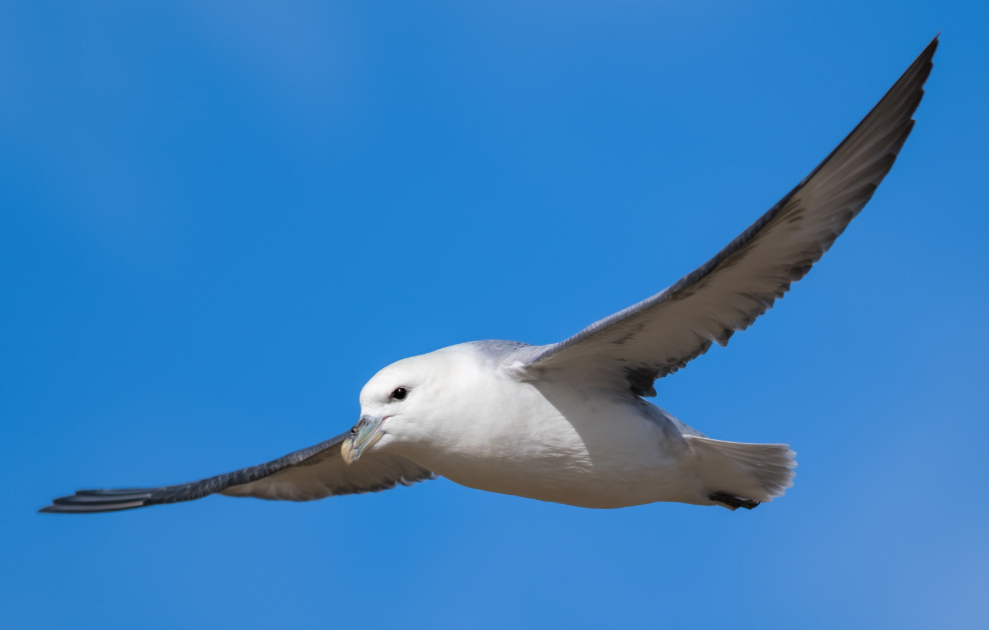
And then in flight, with almost effortless grace, hovering over the sea with hardly a wingbeat.
I hadn't gone looking for insight. I hadn't set out to practise mindfulness or find a metaphor for my life.
I simply stopped.
Something shifted in me because I had slowed down enough to notice, and afterwards, I found myself writing poetry. You may have read it in my previous post.
Fulmar
I watch them.
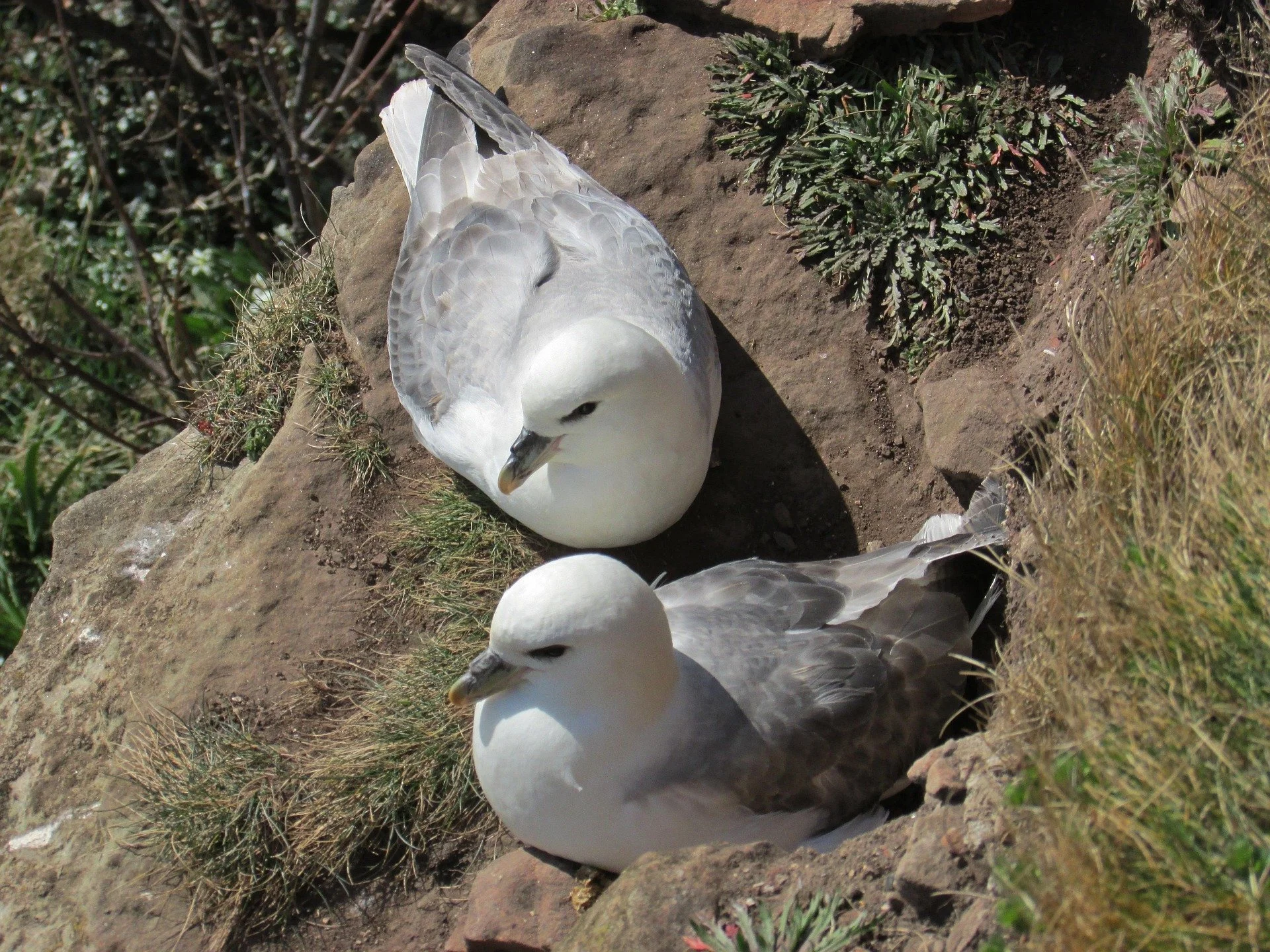
Like two loyal old friends reunited
deep affection standing the test of time.
They lean in, soft heads touching
cackling at one another’s crazy ‘in jokes’
or at their own - who knows -
great belly laughs, with open beaks.
Heads bobbing, knowingly,
they greet one another and embody tribe.
Nest-less, they nestle on the edge
embracing risk and discomfort,
in this rocky intertidal space,
for a single, white egg.
A pearl of reward
for this season of purposeful rest.
And then, for a moment, albatross-like,
from this firm ground they take flight,
swooping broad-winged over ocean home.
Taking their space confidently,
they soar seemingly without effort
shallow wingbeats - just enough -
conserving energy,
resting in flight.
Freedom… at one with the wind.
Gliding on thermals, going with the flow,
catching the direction of breeze and seas
uplifted, and buoyant on air,
they drift over water,
mystery in motion,
white bellies flashing like sea foam against the blue.
Beauty, elegance and grace
betray the warrior-like tenacity of their existence.
In the next season, and for a time,
not seeking rest and refuge,
but living differently on the edge,
a long-haul adventure awaits
with horizon-direction and life beyond it.
A winter dispersal, alone and enduring the elements,
courage is found to withstand tidal storm,
following the call of the wild from within,
until once more, the call to return
to known space,
- and tribe.
Nomad of the ocean
may your pelagic presence inspire us.
Invite us. Influence us
to spread wings broadly and dance with the wind
and - through inner strength and tribal belonging - embrace more fully
a life and love of dynamic equilibrium,
joyfully being and becoming
adventurers in liminal space.
As I reflected afterwards, I realised that the sense of calm and wellbeing I experienced didn't come from the birds alone. It came from paying attention in and to the space.
Deep noticing changed me. Almost without realising it, my breathing had slowed. My shoulders softened. The internal chatter that so often accompanies modern life had begun to quieten.
And perhaps this is something many of us need more than we realise.
We can become very used to noticing and responding to what everyone else needs, while becoming surprisingly unfamiliar with the quieter signals of our own inner being. Perhaps that is one reason spending time in blue space can feel so nourishing.
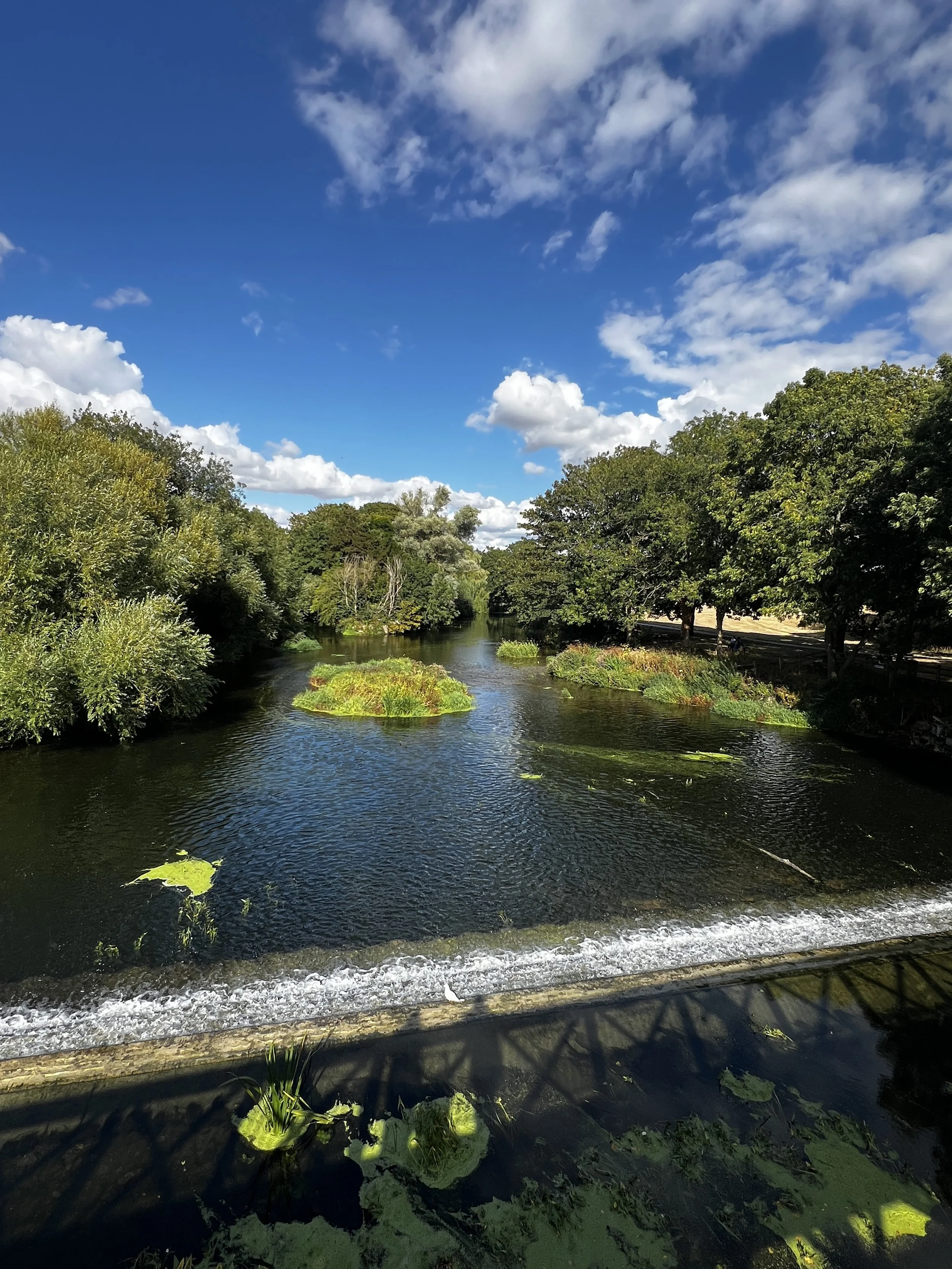
For a while, we can let the rhythm of the water hold us, giving us space to breathe, notice and simply be, without the usual external pressures.
Learning to really notice: nature, attention and wellbeing
And there is good reason for the sense of settling we can experience in nature. A growing body of research suggests that spending time in natural environments can support our mental wellbeing and reduce feelings of stress. Some studies have also found changes in physiological measures such as cortisol, although the effects vary depending on the environment and the experience itself.
And perhaps you've noticed something similar with your own attention. The natural world has a way of catching our interest without demanding it. We don't have to concentrate hard on the movement of a cloud, the rhythm of a wave or the flight of a bird. Somehow, we simply find ourselves drawn to it. Research suggests that these kinds of experiences may give our more effortful, directed attention a chance to recover, with some studies finding improvements in areas such as working memory and cognitive flexibility.
Perhaps that's part of what happened to me on that cliff. I wasn't trying to quieten my mind. The fulmars simply gave my attention somewhere to rest, and I became curious.
Water, it seems, has its own way of slowing us down.
Blue Mind is Wallace J. Nichols' term for the mildly meditative state people can experience when they are near, on, in or under water, that sense of calm and wellbeing associated with being in blue space. Perhaps many of us instinctively know this already. Blue Health is the wider field of research exploring how our relationships with blue spaces such as oceans, rivers, lakes, estuaries and other bodies of water, may influence health and wellbeing.
And perhaps the beauty of 100 Days of Blue has been that it gives us permission to explore that relationship for ourselves.
Noticing. Paying attention. Being curious about how blue space affects us, rather than simply being told that it is good for us.

‘Perhaps the hundredth day of 100 Days of Blue isn't an ending at all. It is simply a threshold, a marker, a promise for a different tomorrow.’
Quality of attention is something we often lose in busy lives. We move quickly from one thing to the next, even when we're outside. We photograph a view before we've truly experienced it. We tick off another walk without really noticing where our feet have taken us.
We can bring that same habit into our own lives: moving swiftly from one task to the next, responding to everyone else's needs before checking in with our own, pursuing what we think we should or ought to do without always sensing and responding to what we actually need.
Deep nature connection asks something different of us. It invites curiosity before certainty. Wonder before explanation. Relationship rather than observation. It’s slower discernment.
What happens when we dwell with something just a little longer? What do we notice?
What, if anything, is this connection with nature inviting us to learn, not simply as a metaphor, but as an embodied experience or deeper wisdom to receive?
These are questions I often find myself returning to in coaching. Not because nature has a immediate or ready-made answers for us, but because slowing down can create enough space for our own answers to emerge.
Mindfulness practices also invite us to pay intentional attention, in the present moment and without judgement. Nature has an extraordinary way of inviting exactly that. Not by asking us to empty our minds, but by gently inviting and welcoming our attention.
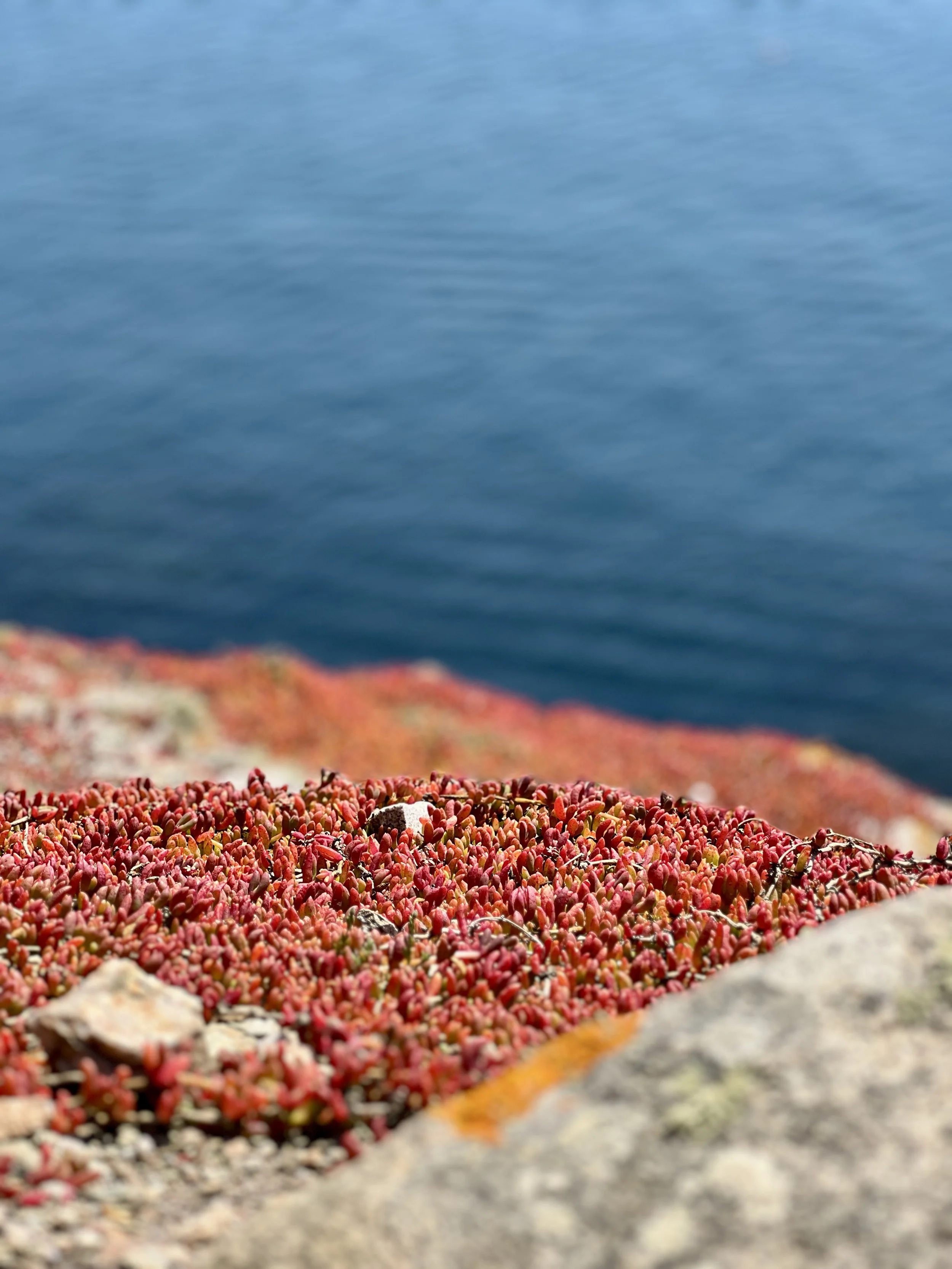
‘Deep nature connection asks something different of us. It invites curiosity before certainty. Wonder before explanation. Relationship rather than observation.’
The cry of a bird. The rhythm of waves. The intricate patterns of lichen on a rock. Wind ruffling a feather. Salt on skin.
These moments become anchors, drawing us back to the present and giving our busy brains permission to rest.
Environmental psychologists use the phrase ‘soft fascination’ to describe one aspect of this experience. Elements of the natural world can hold our attention without demanding the continual, effortful focus required by emails, phones and endless notifications - and perhaps also the people around us. This idea sits within Attention Restoration Theory, which suggests that natural environments may give our minds a chance to recover from the sustained attention that everyday life demands. Perhaps that's why so many of us return from the coast or a nature walk sighing ‘I feel like myself again.’
When blue space becomes a companion
As a Blue Health Coach, I've come to believe that this quality of attention changes everything.
Coaching in blue space is never simply walking and talking. The natural environment becomes part of the conversation. As we slow down and notice more deeply, our oceans, rivers, lakes and streams have a quiet way of refreshing perspective, bringing clarity and gently revealing what matters most.
And this is at the heart of what I do through Embrace Blue.
Coaching is not about someone else giving you the answers. It is about creating the space to listen more deeply. To what matters to you, to what may be asking for your attention, and perhaps to the quieter voice beneath all the noise.

‘The living world has an extraordinary capacity to meet us and share its wisdom when we offer it our exquisite attention,’
Sometimes it’s enough to notice how the rhythm of the waves or movement of sunlight on the water changes our breathing, or becoming aware of where our attention naturally rests, bringing into awareness what had quietly remained unseen. Sometimes it means standing in awe, allowing beauty to soften something we've been carrying for far too long. To know or feel what needs to change.
Natural blue and green spaces are, then, not simply a backdrop they are companions in conversation, reflection, restoration and growth. So space matters. For some, that might be a shoreline, for others a woodland path, riverbank, a garden or simply a view from a window. Though perhaps what matters even more is the quality of attention we bring to it.
And somehow the invitation reaches beyond our own wellbeing, too.
The more time we spend paying attention to the living world, the more we begin to notice that we are part of it. A beach is no longer simply somewhere we walk. A river becomes more than something to cross. Birds, rocks, trees, changing skies and movement of wind and water, become familiar in a way that is both humbling and connecting.
There is evidence that time in nature may influence how we relate to one another, too. Research suggests that time spent in nature can encourage prosocial behaviour (those small acts of cooperation, kindness and helping that connect us with other people), and that those who feel more connected to nature are more likely to care for it and act in ways that protect it. It is certainly easier to care for something we have taken the time to notice, to know and to feel connected to.
Our wellbeing and the wellbeing of the natural world are not separate things. We are part of the same living system, connected to something far greater than ourselves. Perhaps paying attention is where that relationship begins. Perhaps it is also where a different relationship with ourself deepens.
Another invitation
Wherever you find yourself in nature, whether that is walking a familiar coastal path, floating in the sea, sitting beside a river or paying attention to the wildlife and growth in your own garden, I invite you to resist the temptation to rush on.
Stay five minutes longer.
Become deeply curious. Notice something you've not ‘seen’ before. Listen with all your senses.
Not because you have to, or because it's another wellbeing exercise to tick off. But because the living world has an extraordinary capacity to meet us and share its wisdom when we offer it our exquisite attention, and be fully present.

‘an invitation to keep noticing’
And notice what happens in you.
What softens?
What becomes clearer?
What have you been too busy to notice before?
What are you drawn towards?
What might you be ready to let go of?
As I watched the fulmars disappear beyond the headland, I realised they had done exactly what my poem suggests. They had invited me, not to fly, not to be more adventurous, but simply to notice. To become still enough that awe and wonder could find me, and open enough to receive nature’s emergent wisdom.
Perhaps the hundredth day of 100 Days of Blue isn't an ending at all.
It is simply a threshold, a marker, a promise for a different tomorrow.
An invitation to keep noticing.
A encouragement to keep turning towards water, towards the living world around us, and to be in relationship with it. To notice what happens when we slow down and what happens in us. To trust that when we slow down, the natural world has much to teach us.
In becoming more deeply nature connected, compassion grows, awe softens our edges, and gratitude shifts our perspective. When we create enough space to notice what is within us, around us and between us we begin to see our next step with a little more clarity.
And everything else flows from there.
Pause…
What might be different if you gave yourself five unhurried minutes beside water this week?
If this invitation resonates, you can explore Blue Health Coaching with me by booking a short discovery call with me here